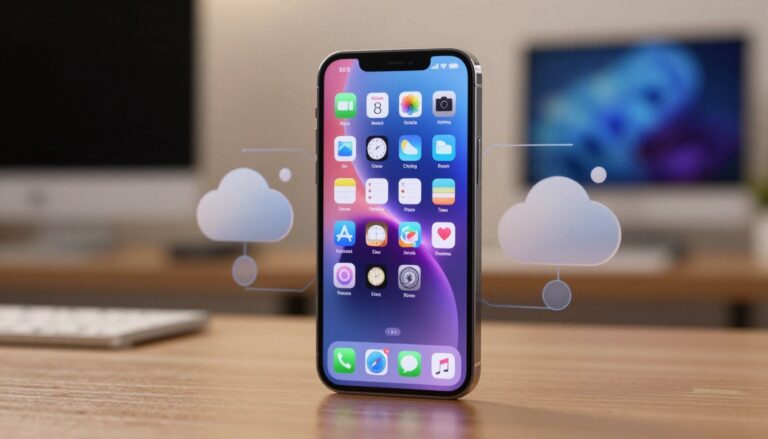
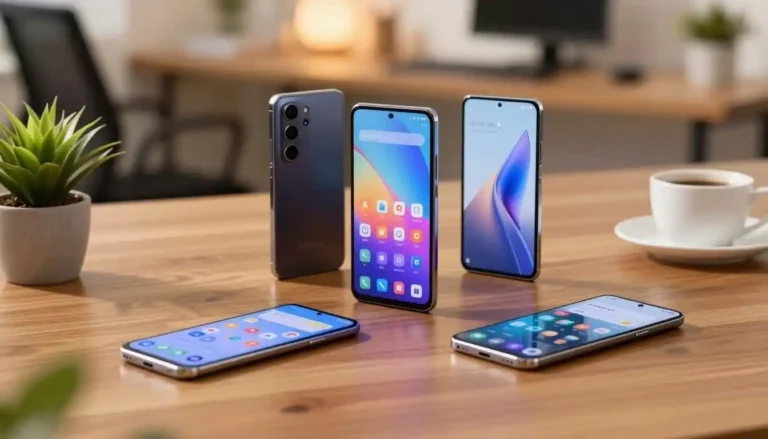
In 2026, flagship smartphones are no longer trying to impress buyers with just bigger numbers. Yes, the chips are faster, the cameras are sharper, and the displays are brighter than ever. But the real story this year is something deeper: premium phones are becoming smarter, more personal, and more specialized. Some are built for creators, some for gamers, some for AI productivity, and some for buyers who simply want the best all-round experience money can buy. As of April 2026, the premium conversation is centered around phones like the Samsung Galaxy S26 Ultra, Apple iPhone 17 Pro Max, Google Pixel 10 Pro XL, OnePlus 15, and Xiaomi 15 Ultra, with devices like the HONOR Magic8 Pro and vivo X300 Ultra pushing the category even further.
What makes 2026 exciting is that there is no single “perfect” flagship for everyone. Instead, the market has split into clear personalities. Samsung is chasing the title of the most complete do-it-all Android phone. Apple is refining the premium iPhone into an even stronger video and ecosystem machine. Google is turning the Pixel into the most naturally helpful AI phone. OnePlus is trying to deliver true flagship power without the brutal flagship price. Xiaomi is going after photography lovers with almost camera-like ambition. That means choosing the best flagship phone in 2026 is less about asking which one is the most expensive, and more about asking which one matches the way you use a phone every day.
Why flagship phones matter more in 2026
A flagship phone used to mean the same basic package: top processor, premium build, strong cameras, and a high-end display. In 2026, that definition has evolved. Today’s flagship buyers care about things like how good the zoom really is, whether the AI features are actually useful, whether the phone stays cool during long gaming sessions, how quickly it charges, and how many years of software support it will receive. A premium phone is no longer just a luxury object. It is also a camera, gaming console, editing tool, work assistant, navigation device, and AI companion all in one.
That is why the best flagship phones of 2026 feel more different from one another than they did a few years ago. The hardware race is still fierce, but the software layer now matters just as much. The brands that win in 2026 are the ones that combine elite hardware with experiences that feel useful in real life. AI summarization, contextual help, better stabilization, intelligent battery management, privacy features, and smarter image processing are becoming just as important as megapixels and benchmark scores.
The best flagship smartphones of 2026
1) Samsung Galaxy S26 Ultra — the best all-round Android flagship
If you want the safest recommendation in the Android flagship world, the Galaxy S26 Ultra is it. Samsung has once again built a phone that tries to do everything at the highest level: a 6.9-inch display, a 200MP main camera, a 5,000mAh battery, a Snapdragon 8 Elite Gen 5 for Galaxy, a refined premium body, and all the productivity extras Samsung fans expect. It is still one of the very few phones that can feel like a phone, a mini tablet, and a note-taking device at the same time.
The design story of the S26 Ultra is not about radical reinvention. It is about refinement. Samsung has trimmed the body to 7.9mm, kept the weight to 214g, and paired that with a large, immersive screen that still feels unmistakably “Ultra.” This is the kind of phone that feels engineered for people who live on their devices: people who edit photos, watch content, multitask, sketch ideas, and manage work on the go.
Also Read





The display is one of the phone’s biggest strengths. Samsung pairs the large panel with its new built-in Privacy Display, a feature that limits side-angle visibility and lets users hide the full screen, specific apps, passwords, or notifications when in public. That is one of the smartest flagship additions of 2026 because it solves a real-world problem, not just a marketing one. Samsung also says the panel reaches 2600 nits peak brightness, which helps outdoors and reinforces the Ultra’s reputation as a media powerhouse.
Performance is exactly what you would expect from a top-tier Samsung flagship. The phone uses the Snapdragon 8 Elite Gen 5 for Galaxy and a larger vapor chamber, with Samsung claiming 21% greater thermal performance. In simple terms, that means the S26 Ultra is not just powerful in short bursts; it is built to stay stable during heavy gaming, long camera sessions, and AI-intensive tasks.
Samsung is also leaning harder than ever into AI. The S26 Ultra is positioned as a phone that anticipates what you need next, supports creative tools, and protects personal data at the same time. That matters because Samsung’s AI pitch in 2026 is less about novelty and more about making the phone feel like a premium assistant built into the hardware itself.
One important caveat: Samsung is currently investigating a 3x telephoto blur issue on some S26 Ultra units, and a future software fix has been acknowledged. That does not erase how strong the phone is overall, but for a device at this price level, it is worth mentioning.
Best for: power users, Samsung fans, multitaskers, premium Android buyers, S Pen users, and people who want the most complete flagship package.
2) Apple iPhone 17 Pro Max — the best premium iPhone for creators and video
The iPhone 17 Pro Max is Apple doing what Apple does best: taking an already strong flagship formula and polishing it until it becomes incredibly hard to criticize. On paper, the phone brings an A19 Pro chip, a 6.9-inch OLED display, an updated 48MP triple-camera system, stronger battery claims, and deeper Apple Intelligence support. But the reason many buyers will still choose it is not the spec sheet. It is the consistency.
Apple’s biggest advantage in 2026 is still its camera and video experience. The iPhone 17 Pro Max offers a 48MP Fusion Main, 48MP ultra-wide, and a telephoto system that reaches 8x optical-quality zoom, with up to 40x digital zoom. For creators, Apple goes much further than simple photo quality. The phone supports ProRes, ProRes RAW, Apple Log 2, 4K Dolby Vision, and even Genlock support, which shows how seriously Apple is taking professional-grade mobile video.
Battery life is also a major strength. Apple rates the iPhone 17 Pro Max for up to 39 hours of video playback, which makes it one of the endurance leaders among premium phones this year. Charging is still more conservative than many Chinese rivals, but Apple says it can reach 50% in 20 minutes with a 40W adapter or higher, and MagSafe/Qi2 wireless charging now goes up to 25W.
Design-wise, Apple has made an interesting move with the Pro models. The iPhone 17 Pro Max uses an aluminum unibody design, Ceramic Shield 2 front and back, and comes in finishes like Silver, Cosmic Orange, and Deep Blue. It also remains a large, weighty premium device at 233g, so this is not the iPhone for people who want something light or discreet. It is the iPhone for buyers who want the biggest, most premium Apple phone available.
In everyday use, the iPhone 17 Pro Max may still be the easiest flagship to recommend to people who do not want to think too much about their purchase. It is premium, polished, fast, stable, and deeply integrated with the Apple ecosystem. It may not lead the industry in charging speed or battery capacity numbers, but it continues to feel like one of the most complete phones in real-world use.
Best for: iPhone users, video creators, Apple ecosystem buyers, and anyone who values polish and reliability over headline-chasing specs.
3) Google Pixel 10 Pro XL — the smartest AI flagship
The Pixel 10 Pro XL is the flagship for people who want their phone to feel genuinely clever. Google is not trying to beat everyone at every single hardware spec. Instead, it is building a phone that feels more helpful, more adaptive, and more intelligent in daily life. The Pixel 10 Pro line uses the Tensor G5, 16GB RAM, a 6.8-inch XL form factor, up to 100x Pro Zoom, and 7 years of new features and updates. That last point matters a lot: the Pixel is one of the safest long-term flagship buys in 2026.
Google’s real strength is AI integration. Features like Magic Cue, Gemini Live camera sharing, and Camera Coach push the Pixel beyond the usual “AI wallpaper” tricks. The idea is simple but powerful: the phone can help you understand what you are seeing, frame a better photo, and surface useful information at the right moment. That makes the Pixel 10 Pro XL feel more like a smart assistant with a flagship camera attached than a traditional premium phone with a few AI extras sprinkled on top.
The camera system also remains central to the Pixel identity. Google is promising its highest-quality photos and videos yet, and the Pixel 10 Pro pushes especially hard on long-range photography, AI-enhanced imaging, and stabilized video. Google’s approach is not about making photos look the most dramatic. It is about making them look naturally impressive, with strong computational help working quietly in the background.
Battery and charging are strong, though not class-leading by Chinese flagship standards. Google says the Pixel 10 Pro XL can charge to 70% in about 30 minutes, and both Pro models can deliver 24+ hours of battery life, extending up to 100 hours with Extreme Battery Saver. Google also adds Qi2-style magnetic charging support through Pixelsnap, which is a practical usability win.
The Pixel 10 Pro XL is the phone for buyers who care most about smart software, excellent cameras, clean Android, and long support. It may not be the most aggressive phone in the market, but it might be the most thoughtful.
Best for: AI lovers, Pixel fans, mobile photographers who like natural image processing, and buyers who keep their phones for many years.
4) OnePlus 15 — the flagship value king
If there is one phone in 2026 that most clearly asks, “Why are you paying so much more elsewhere?”, it is the OnePlus 15. This phone blends elite performance with a huge battery and fast charging, while staying below the ultra-premium pricing tier. The OnePlus 15 brings a Snapdragon 8 Elite Gen 5, a 7,300mAh battery, a 165Hz display, a triple 50MP camera system, and a clear performance-first identity.
The battery story is especially impressive. In a market where some ultra-premium phones still hover around the 5,000mAh mark, OnePlus jumps to 7,300mAh. That makes the OnePlus 15 one of the most endurance-focused mainstream flagship phones of the year. Charging speed is excellent too, though there is an important regional detail here: global specs highlight 120W charging, while the US-facing product page emphasizes 80W fast charging, so buyers should check the version sold in their market.
Gaming is another major selling point. OnePlus explicitly promotes always-on 120FPS in games, and its performance marketing is not subtle. This is a phone made for people who want speed, responsiveness, and stamina. It is a flagship that feels proud of being fast in a very direct, enthusiast-friendly way.
The camera system is good, and OnePlus is pushing computational photography harder in 2026, but this is not the phone you buy if camera excellence is your absolute top priority. You buy the OnePlus 15 because it delivers an extremely compelling mix of battery life, gaming power, charging speed, and flagship performance without demanding the kind of wallet pain associated with the most expensive ultra phones. In the US market, the 12GB/256GB model is widely listed at $899.99, which helps explain why it stands out so strongly on value.
Best for: value-conscious flagship buyers, gamers, power users, and anyone who wants maximum battery life without going to a gaming-phone niche brand.
5) Xiaomi 15 Ultra — the camera-first flagship
The Xiaomi 15 Ultra is a reminder that some brands still build flagships with a very specific obsession. In Xiaomi’s case, that obsession is photography. This is one of the most camera-centric premium phones on the market, built around a 6.73-inch WQHD+ AMOLED display, 3200 nits peak brightness, Snapdragon 8 Elite, and a Leica-branded imaging system that feels unapologetically ambitious.
The headline camera hardware is striking: a 50MP 1-inch main sensor, a 50MP ultra-wide, a 50MP floating telephoto, and a 200MP ultra telephoto. Xiaomi also layers on deeper photographic tools, including Leica looks, master-lens focal presets, RAW/UltraRAW capture, and creator-friendly video options up to 8K and 4K 120fps. This is not just a phone that wants your snapshots to look good. It wants you to treat the camera system like a creative instrument.
The battery and charging story is strong too. The global spec lists a 5,410mAh battery, 90W wired charging, and 80W wireless charging, plus Xiaomi’s own cooling system and AI software layer. HyperAI includes writing, speech recognition, interpreter tools, and Gemini support, though the real reason to buy the phone remains the camera personality rather than the AI pitch.
For photography lovers, the Xiaomi 15 Ultra is one of the most exciting flagships of the year. For mainstream buyers, it is a bit more niche because software polish, ecosystem strength, after-sales support, and regional availability are not always as straightforward as Samsung or Apple. But for the right user, this phone is deeply appealing.
Best for: mobile photographers, camera enthusiasts, zoom lovers, and buyers who want a flagship that feels more like a Leica-inspired imaging device than a general-purpose premium phone.
Other flagship phones worth watching
The HONOR Magic8 Pro deserves attention because it shows how aggressively Chinese brands are pushing battery and charging technology. HONOR gives it a 200MP Ultra Night Telephoto, a 7,100mAh silicon-carbon battery, 100W wired charging, 80W wireless charging, and GPU-NPU frame-generation features aimed at gaming. It also adds deep AI safety tools like deepfake detection and voice cloning detection, which feels especially relevant in 2026.
The newly launched vivo X300 Ultra is another sign of where flagship phones are headed. It is being positioned around professional photography, with a 200MP telephoto, large sensors, 4K 120fps, 10-bit Log, ACES workflow compatibility, and a 6,600mAh battery. Even if it is not the most mainstream global recommendation yet, it shows that the top end of the market is increasingly focused on turning phones into creator-grade tools.
The biggest flagship smartphone trends in 2026
1) AI is finally becoming useful
For years, smartphone AI felt like a demo. In 2026, it is becoming a real reason to choose one phone over another. Samsung is using AI for privacy, image editing, and predictive assistance. Apple is rolling Apple Intelligence more deeply into the premium iPhone experience. Google is making AI central to the Pixel identity through Magic Cue, Camera Coach, and Gemini Live. HONOR is using AI not only for convenience but also for fraud and identity-related protection.
2) Battery technology is changing the game
One of the most important shifts in 2026 is the rise of silicon-carbon and higher-density battery designs. OnePlus is offering 7,300mAh, HONOR is offering 7,100mAh, and vivo has reached 6,600mAh in its new Ultra phone. That changes expectations. Buyers are starting to ask why a premium phone should settle for average endurance when some rivals now last dramatically longer.
3) Zoom and video matter more than ever
The flagship camera race has moved beyond “who has the nicest main camera.” In 2026, premium buyers care much more about telephoto quality, stabilization, pro video tools, and creator workflow features. Apple’s Pro Max now emphasizes advanced video formats and 8x optical-quality zoom. Google pushes 100x Pro Zoom with AI help. Xiaomi and vivo are going hard on big sensors and creator-friendly recording modes.
4) Gaming is no longer a niche feature
Gaming has become a mainstream flagship priority. Samsung promotes improved thermals through a larger vapor chamber. OnePlus markets always-on 120FPS gameplay and extreme endurance. HONOR adds GPU-NPU super-resolution and frame generation. Even Apple’s A19 Pro includes hardware-accelerated ray tracing, showing that premium phones increasingly need to be excellent gaming devices, not just capable ones.
Buyer’s guide: how to choose the right flagship phone in 2026
Choosing a flagship phone is easier when you stop looking for “the best” and start looking for the best for you.
Buy the Galaxy S26 Ultra if:
- You want the most complete Android flagship
- You care about productivity, multitasking, and premium extras
- You like Samsung’s display quality, camera flexibility, and ecosystem features
Buy the iPhone 17 Pro Max if:
- You already use Apple products
- You shoot a lot of video
- You want premium polish, strong battery life, and dependable camera quality
Buy the Pixel 10 Pro XL if:
- You want the smartest AI phone
- You prefer clean Android and long software support
- You like natural-looking photography and intelligent software tools
Buy the OnePlus 15 if:
- You want the best value flagship
- Gaming, charging, and battery life matter most
- You want elite performance without crossing into the most expensive tier
Buy the Xiaomi 15 Ultra if:
- Camera hardware is your top priority
- You want an enthusiast-grade flagship
- You care more about photography power than mainstream software polish
Buy the HONOR Magic8 Pro if:
- You want huge battery life and ultra-fast charging
- You want a premium flagship that feels different from Samsung and Apple
- You care about AI safety features and strong low-light zoom hardware
Best flagship phones by budget type
If your budget is ultra-premium, the Galaxy S26 Ultra and iPhone 17 Pro Max are the easiest recommendations. Samsung’s unlocked 256GB Galaxy S26 Ultra is listed at $1,299.99 in the US, while Apple lists the iPhone 17 Pro Max from $1,199. These are phones for buyers who want the best-known premium options and are willing to pay for brand, ecosystem, and top-tier positioning.
If your budget is premium but more price-aware, the OnePlus 15 is the standout. At around $899.99 for the 12GB/256GB version in US listings, it gives buyers flagship-level speed and battery life without jumping into ultra-phone pricing. That is why it may be the smartest buy for many people, even if it is not the absolute most luxurious.
If your budget is less about price and more about specialized value, then the Pixel 10 Pro XL and Xiaomi 15 Ultra make more sense. The Pixel gives you long-term software value, AI value, and camera value. The Xiaomi gives you photographic value and creator value. They are not necessarily “cheap,” but they can be the best use of money depending on what kind of flagship experience you care about most.
Final verdict
The best all-round flagship Android phone of 2026 is the Samsung Galaxy S26 Ultra. The best premium iPhone is the iPhone 17 Pro Max. The smartest AI-first flagship is the Google Pixel 10 Pro XL. The best value flagship is the OnePlus 15. And the best camera-first flagship for enthusiasts is the Xiaomi 15 Ultra.
The most important thing to understand is this: in 2026, flagship phones are no longer all trying to be the same phone in different shapes. They now have distinct personalities. That is great news for buyers. It means you can finally choose a flagship that feels designed around your priorities—whether that is AI, photography, gaming, battery life, software support, or overall value. And that is what makes the 2026 flagship market one of the most interesting we have seen in years.
Summary
- Samsung Galaxy S26 Ultra = best all-round Android flagship
- iPhone 17 Pro Max = best for Apple users and video creators
- Pixel 10 Pro XL = best AI flagship
- OnePlus 15 = best value flagship
- Xiaomi 15 Ultra = best camera-first flagship
- HONOR Magic8 Pro / vivo X300 Ultra = exciting alternatives pushing battery and camera trends forward