
Introduction
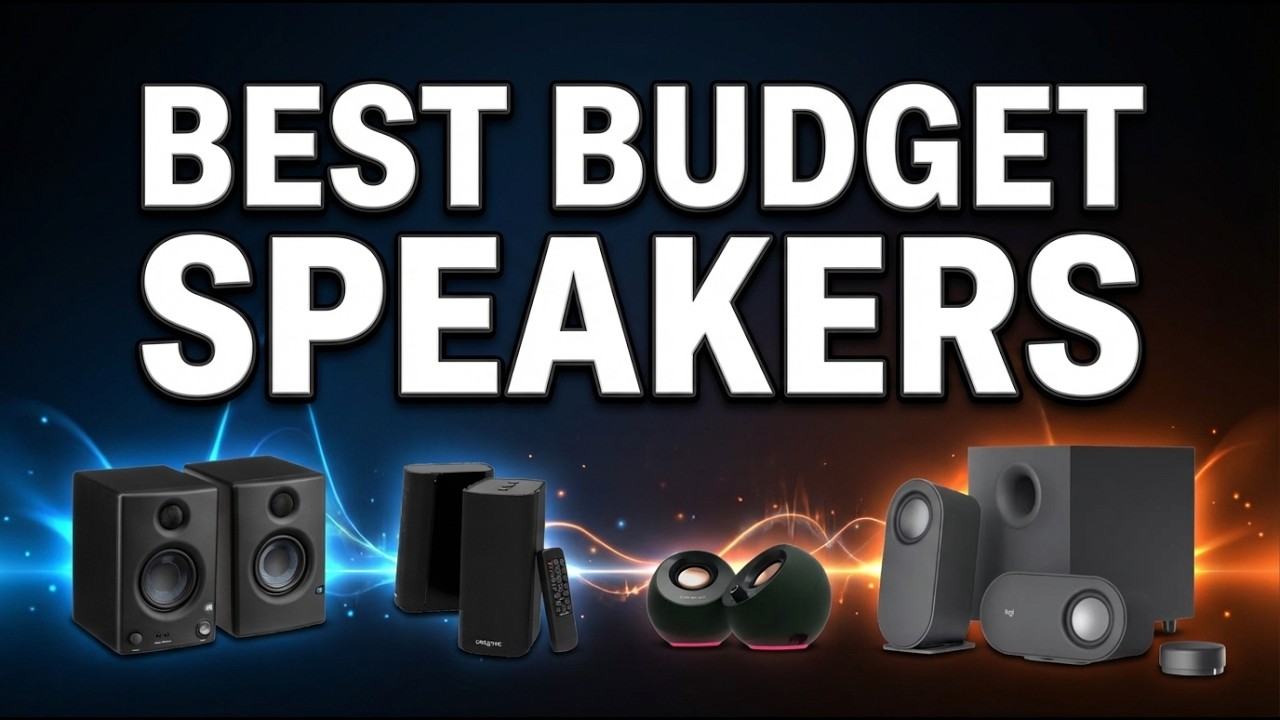
When it comes to upgrading your desk audio, budget computer speakers have gotten way better than a lot of people realize. But which ones are actually worth buying? After digging through the current market, comparing specs, cross- referencing reviews, and looking at what actually makes sense for real desk setups, we’ve narrowed it down to our top budget computer speaker picks out of the 33 options we took a look at. All of these speakers can be had for around $25 to $125. So, we have something from ultra budget all the way to high budget. Some of these are tiny and affordable, perfect if you just want something much better than your monitor or laptop speakers. Others deliver fuller, richer sound for music and movies, and a few are tuned more for gaming with a livelier, more energetic sound that makes your setup feel more immersive. So, depending on what you’re after, one of these could be your perfect match. Let’s get started.
Logitech Z407 (Best Overall)
Starting off our list is the Logitech Z47. Our pick for the best overall budget computer speakers. Even though it’s been around since 2020, it’s still a favorite for budgetconscious buyers because it gets so many things right. It delivers a strong balance of fun sound, useful features, and everyday versatility. And while it costs a little more than entry-level options, that extra money gets you a much more complete setup. This is a 2.1 system, so you’re getting two compact satellite speakers, plus a dedicated subwoofer. That gives the Z407 a much bigger, fuller, and more entertaining sound than most small 2.0 speakers in this price range. Games feel punchier, movies sound fuller, and music has noticeably more bass weight and energy. Logitech also gives you a solid feature set. You get Bluetooth 5.0, a 3.5 mm aux, and a wired USB connection, so it’s easy to use with a desktop, laptop, phone, or tablet. Power is solid for the category 2 with 40 watts overall, 20 watts going to the subwoofer and 10 watts to each speaker, which helps explain why the system sounds bigger than most budget desktop options. Build quality is solid for a budget system, too. It’s mostly plastic, so it doesn’t feel premium, but it feels well-made, practical, and clean looking on a desk. The satellites are compact without feeling flimsy, and the subwoofer adds a bit more presence without being overly bulky. One of the nicest extras is the wireless control dial, which makes it easy to adjust volume and playback without constantly reaching around your desk. The satellites are also flexible with vertical or horizontal placement. There are some trade-offs. The small satellites can’t match the clarity and stereo finesse of proper bookshelf or monitor speakers, and the bass is more punchy than truly deep. At very high volumes, the sound can flatten out a bit, and the cables are a little short. Still, if you want one speaker system that works well for gaming, videos, music, and general desktop use, the Logitech Z407 is our number one overall recommendation. If you just want the cheapest speaker upgrade that’s actually worth buying, the Creative Pebble V3 is our top recommendation.
Creative Pebble V3 (Best Under $50)
At under $50, these are compact, simple, and a massive step up from the weak tiny speakers built into most laptops and monitors. You can connect and power the dual 2.25 25 in fullrange drivers with a single USBC cable. Pair them over Bluetooth 5.0 and even get a little extra volume from the built-in gain switch if your device provides enough power. Plus, there’s also a 3.5 mm ox input for older devices. Creative also includes clear dialogue processing which can help voices come through a bit more clearly for videos, calls, and spoken content. For casual listening, meetings, YouTube, and everyday PC use, the Pebble V3 does a genuinely respectable job. The drivers are angled upward toward your ears, so they sound a little more focused and direct than a lot of cheap desktop speakers that just fire straight ahead. Build quality is decent for the price, too. They’re mostly lightweight plastic, so they don’t feel premium, but the design is clean, compact, modern, and put together well enough for a simple desk setup. These are still tiny USB powered speakers, so they’re not built for deep low-end rumble, big room volume, or replacing a proper 2.1 stereo setup. They absolutely beat built-in speakers, but they’re still meant for basic desk use, not for people chasing cinematic sound or heavy bass impact. But if your priorities are price, a tiny footprint, wireless convenience, and solid everyday performance, the Creative Pebble V3 is still one of the best ultrabudget computer speakers you can buy.
Creative Pebble Pro (Best Compact Upgraded Pick)
If the Pebble V3 sounds appealing, but you want a more capable version of that same idea, the Creative Pebble Pro is the clear next step up. It keeps the same small desk friendly design, but adds enough meaningful improvements to feel like a genuine upgrade rather than just a minor refresh. Creative gives you re-engineered 2.25 in fullrange drivers, rear passive radiators, Bluetooth 5.3, USBC audio, a 3.5 mm ox and RGB lighting. It also has a dedicated headset and mic ports for extra desktop convenience that previous versions didn’t offer. Compared to the V3, the Pebble Pro sounds fuller, louder, and more confident, especially in the bass. A big reason is power. It can run at 10 watts normally, but can jump to 30 W with a separately purchased USB PD adapter. That’s a big step up from the 8watt Pebble V3, and it helps the Pro sound less strained when you push the volume. The RGB lighting is a nice extra, too. It adds some visual flare to a desktop setup and gives you a few different modes and colors. And of course, you still get the 45° upward angle, which helps aim the sound toward your ears. The trade-offs are price and limitations. At this point, it’s no longer dirt cheap. And while the bass is better than the V3, it still won’t replace a true 2.1 system or larger speakers with deeper low-end. There’s also no subwoofer output, so you’re locked into the 2.0 setup. Still, if you want compact speakers with stronger sound, better features, and more polish than true entry-level options, the Pebble Pro is one of the best upgraded picks in the category.
PreSonus Eris E3.5 (Best For Music & Content Creation)
If you care more about clean, balanced sound than exaggerated bass or flashy effects, the Pressonus Aerys E3.5 is one of the best high budget picks. Priced slightly above $100. Instead of going for boosted bass and fake excitement, these are tuned more like compact media reference monitors. So, the Focus is cleaner mids, clearer vocals, and a more balanced presentation. Overall, that makes them a strong choice for music listening, video editing, content creation, casual mixing, and desktop use where detail matters more than chest thumping low-end. Pressonus gives you a 3.5 in woven composite woofer, 1-in silk dome tweeter, and 50 ws of power, which helps the E3.5 sound more substantial than the tiny drivers you get in typical desktop speakers. You also get way better connectivity than most speakers anywhere near this price. Balanced 1/4 in TRS RCA, a front 1/8 in ox input, and a front headphone jack that mutes the speakers when headphones are plugged in. On top of that, Pressonus includes high and low frequency tuning controls, which is a big advantage on a desk because you can trim the sound a bit for your room or setup. Build quality is solid for the price. They don’t feel especially premium or heavy, but the MDF cabinets give them a more serious monitor-like feel than a lot of plastic budget speakers. There are a couple of trade-offs. First, the standard Aerys 3.5 does not include Bluetooth. You’d need to step up to the more expensive 3.5 BT version for that. So, if wireless connectivity matters to you, just make sure you’re looking at the right model. Second, bass is still the obvious compromise here. A compact 3.5 in speaker can only move so much air, so these won’t give you deep subwoofer style rumble for action games or bass heavy movies. But for buyers who want better sound quality, cleaner detail, and a more mature tuning, the Pressonus Aerys E3.5 is one of the best budget desktop speakers you can buy.
Creative T100 (Top Value Pick For 2.0 Setups)
Next up, we have the Creative T100. And this is one of the best choices for people who want a proper 2.0 speaker setup. There’s no subwoofer here. And yes, some speakers around this price do give you a 2.1 system, but that doesn’t make them better for everyone. The T100 earns its place because it gives you a cleaner, less cluttered setup while still sounding full, clear, and surprisingly refined for its size. It has a more mature sound than a lot of small cheap PC speakers, especially for vocals, music, and everyday use. And it avoids the bulk that comes with a separate subwoofer. Part of that comes down to the hardware. You’re getting 2.75 in fullrange drivers and a built-in digital amp rated at 40 W RMS with up to 80 watts peak, which gives it better presence and output than a lot of entry-level desktop speakers. And while it doesn’t have the deep punch of a true 2.1 setup, Creatives Bass export tuning helps give the low-end a bit more fullness than you’d expect from a compact stereo system. On top of that, it looks clean and well put together with a tall vertical design, a grill that wraps slightly around the sides, and controls built into the top of the right speaker, so it feels like a proper desktop speaker system rather than a basic budget set. You also get a lot of flexibility here with Bluetooth 5.0, O, aux, optical in, and USB playback. The included remote is a really nice touch because it lets you change settings from a distance instead of reaching over to the speaker every time, which makes these even more practical in a TV or room setup. And the optical input is another big plus, giving you a clean digital connection for compatible PCs, monitors, and TVs. So, if your top priority is big bass, a 2.1 setup will still give you more. But if you want a compact, polished, greatl lookinging stereo system that sounds genuinely good without taking over your desk, the Creative T100 is one of the best picks in this price range. If you’re shopping with gaming in mind, the Edifier G2000 is one of the most interesting budget picks out there.
Edifier G2000 (Best For Gaming)
These are clearly aimed at gamers, both in how they look and how they sound. The first thing that makes them stand out is the design. They’re compact, angular, and much more eye-catching than the plain black boxes you usually see. The RGB lighting helps, too, giving them a more playful, gamer focused feel without taking up much space on the desk. But they’re not just about style. The G2000 delivers a punchy, lively, and surprisingly full sound for such a small 2.0 speaker system. Part of that comes from the 2.75 in fullrange drivers and 16 watts RMS of power, which help give it more output and presence than a lot of tiny desktop speakers. Edifier also includes a rear bass port on each speaker, which helps add a bit more low-end weight and fullness than you’d normally expect from something this compact. Gaming, actionheavy content, and everyday entertainment all sound energetic and fun. This is also helped by the dedicated music, game, and movie modes, which lean into a more exciting, entertainment focused sound rather than a flat or studio style presentation. Edifier also gives you a better feature set than you might expect. You get Bluetooth, USB, and a 3.5 mm ox input, which makes them easy to use with a PC, laptop, or other devices. There’s even a subout, which gives you the option to add a subwoofer later if you want to upgrade the setup. You also get built-in controls on the side of the right speaker for power, input switching, LED effects, sound modes, and volume, so the setup stays compact without feeling stripped down. There are some trade-offs, though. This is not the most accurate or refined speaker on the list. And because it’s still a compact 2.0 design, you’re not getting the same low-end authority as a good 2.1 system with a dedicated subwoofer. Still, if your priority is fun sound, a gaming friendly design, and a compact speaker setup with more personality than most budget options, the Edifier G2000 is one of the best budget gaming picks around.
Ultra Budget Picks (Under $25)
To finish off this list, we have a quick ultra budget roundup for people who want to spend as little as possible. These are all under $25. So, the goal here is not amazing sound quality or a long list of features. What you’re really getting is simple, affordable, functional audio for very basic desk setups when built-in laptop or monitor speakers just are not good enough. The Creative Pebble 2 is the easiest one to recommend for most people in this ultra budget range.
Creative Pebble 2.0 (Best Ultra-Budget)
Creative’s original Pebble stands out because it still feels like a thoughtfully designed product rather than just a throwaway cheap speaker. It has the signature 45° elevated drivers housed in that pebble-like shape, which helps it look and feel more polished than a lot of super cheap alternatives. Sound-wise, it does a solid job for the size. The small drivers are backed by rear passive radiators, which help add a bit of bass and fullness, so the Pebble sounds less thin than many other ultra budget options. It still leans a little bright, and you’re obviously not getting huge bass, but for videos, casual music, and everyday desktop use, it performs well. Setup is simple, too, with USB power, 3.5 mm audio, and built-in volume control on the right speaker. So, if you want the safest all-around ultra budget option, the Creative Pebble 2.0 is our best ultra budget pick. And then there’s the bare minimum Amazon Basics Stereo 2.0.
Amazon Basics Stereo 2.0 (Solid Ultra-Budget)
But to its credit, it actually looks and feels a little better than you’d expect for the price. compact and simple, but the metal housing, metal grill, and blue accent lighting give it a slightly more modern look than a lot of ultra cheap desktop speakers. Still a very basic setup with USB power, 3.5 mm ox audio, and an inline volume control, so don’t expect many extras. And in terms of sound, this is still a limited speaker with light bass and modest detail. But if you just want the cheapest possible external speakers that still feel like a real step up from built-in audio, these get the job done. Our third ultrabudget pick is the Cyber Acoustic CA2890.
Cyber Acoustics CA-2890 (Cheap Space Saving Pick)
These are for those of you who prioritize saving desk space. Instead of using two separate speakers, you get a compact speaker bar that can clip onto your monitor. It uses a single USB connection for both power and audio, so you don’t have to deal with extra cables. and it has built-in controls for volume, mute, and play and pause along with LED status lights. It delivers clear, neutral audio and can get surprisingly loud without sounding harsh or distorted. Sure, it has no real bass and stereo separation is pretty weak. But if your biggest problem is desk clutter and you just want simple, clear audio in the cheapest, cleanest setup possible, the CA2890 is one of the most practical, ultrabudget options out there. And lastly, we have the Logitech S150.
Logitech S150 (Best Ultra Budget Established Brand Pick)
This is a simple, no fuss, ultrabudget pick that makes the most sense if you want something compact, easy to use, and backed by a well-known brand. It’s a slim, lightweight USB speaker set, so setup is basically plugandplay with no separate power adapter or extra audio cable to worry about. The controls are built into the front of the right speaker, too, with easyto-reach volume and mute buttons. Sound quality is basic and there’s not much bass here, but for everyday use like office work, casual videos, and voice calls, it gets the job done. So, if you want one of the cheapest speaker options from a trusted brand, the Logitech S150 is a solid ultra budget pick. And there you have it. That’s our top budget speaker picks.
Summing Up
If you found this video helpful, please give it a thumbs up and consider subscribing to The Honest Gadget. Thanks for watching and hopefully we’ll see you in the next