

Introduction
Over the years, I’ve gone through several smartwatches. There have been watches that worked fine for a few weeks before they became a burden to wear. Then there were those that could only last for a few intense training sessions before their “rugged” status got debunked when a little dirt or water got into the equation. It wasn’t really about what they promised in terms of features; it was about whether they would withstand practical use.
The first time I got a GPS smartwatch, I was just looking for better tracking. That’s all. All I wanted was a slightly more precise odometer around my wrist. Little did I know that the device would influence the way I trained, slept, and even stayed motivated during my less motivated days.
Today, in 2026, I find myself using this tool much more often than I had anticipated. Not only does it allow me to monitor my workouts, recover properly, and keep to schedule, but it also reminds me to get moving after hours of sitting at my desk—a feature I tend to turn a deaf ear to, but I value nonetheless.
Here’s what I know about the product based on personal experience. If you’re thinking of purchasing this year, read on for tips on how best to utilize your new gadget.
What You’ll Learn
- The “Multisport” Advantage: Because this is more than a glorified step counter.
- The “Daily Driving” Principle: Why I haven’t removed mine for months now.
- The “Don’t Need” List: Cool-sounding features that are battery killers.
- 2026 Tech Scene: The impact of satellite SOS & MicroLED displays.
- Best Product Picks: Honest suggestions for runners, cyclists, and fitness enthusiasts.
- Lessons Hard Learned: My mistakes so you won’t lose your money.
- Outside the Gym: How I utilize this technology without being active.
What Is a Multisport GPS Smartwatch?
Here’s the straightforward answer.
It is an electronic gadget that manages the intricacies of various activities, such as running, cycling, swimming, and even the likes of “Hybrid Fitness” and paddleboarding, thanks to the integrated GPS and custom sensors. Notably, it does not depend on the presence of your smartphone to gather information about the distance, speed, altitude, and movements.
Why would I find this feature useful? It offers versatility. There’s no need for another gadget when switching from my bicycle to running shoes. My phone can remain safely tucked away in my pocket instead of being attached to my wrist. Moreover, all activities are recorded and analyzed within a single platform.
By 2026, the term “multisport” will have become more meaningful than simply choosing a different emblem for each workout. The watch understands the significance of recovering after a tough swimming session before a lengthy run on the following day.
Why Do I Still Need One Each Day?
I never imagined that I would use this tool so much. Nevertheless, it became my daily habit just like my coffee.
It Helps Me Stay Systematic in My Workout Regime
Initially, I was doing all my exercises in several different apps. There was an application for cycling, another one for running, and my “vague feeling” regarding the amount of weight I lift. However, those days have long gone. Everything is now organized. It takes less time for me to analyze my achievements as everything can be seen on the same screen. It helps make decisions on whether it is a good day for pushing myself further or resting.
I Don’t Need to Bring My Phone with Me
Training without a phone gives me a different feeling. I don’t get distracted by it because there are no calls, no work-related emails, and no other unnecessary things. But I still feel secure with the new technology of satellite SOS and offline music available in the 2026 flagship model.
It Helps Me to Train More Efficiently
Now, I know when to stop and rest because the device doesn’t allow me to make decisions on my own based on random guesses. At first, when I started my training, I used to do the workout anyway, regardless of whether I felt exhausted or ill.
But after using the watch, it became clear that something was wrong with my body. If my pulse was higher than usual during low-intensity running, it meant I needed some rest because I was getting sick.
Moreover, if I didn’t sleep well, then my plan of doing a “tempo run” became a “recovery walk.”
Features That Matter
I’ve come to realize that not everything matters. While certain technologies may be hyped at keynote talks, in the real world, they’re simply not utilized. Below is what matters to me.
1. Multi-Band/Dual-Frequency GPS Accuracy
This one is the most crucial feature out there. Come 2026, Dual-Band (L1+L5) is where it’s at. When training in an urban setting with many tall buildings or off-trail in heavily wooded areas, a regular GPS receiver will lose you somewhere between two trees.
Your smartwatch should:
- Lock onto the signal in less than 10 seconds.
- Don’t drift into the middle of the lake when your path leads down the street.
- Consistently track your distance correctly.
2. No Need to Take the Phone with Me
The absence of the smartphone is an unusual sensation for me. I am not being interrupted by anything like calls, work emails, or other distractions. However, I am safe with the latest technological advances provided by the satellite SOS feature and offline music on the 2026 flagship model.
3. Aids Me in Effective Training
I know when to take a break and recover now, as I cannot make any arbitrary choices while working out without consulting the smartwatch. In the past, I would continue my training regardless of how exhausted and unwell I felt.
However, the usage of the watch helped me notice that there was something wrong with my body if my pulse exceeded normal levels when I was jogging at low intensity.
If I slept poorly at night, I would have to convert my planned tempo run into recovery walking instead.
4. Health and Recovery Data
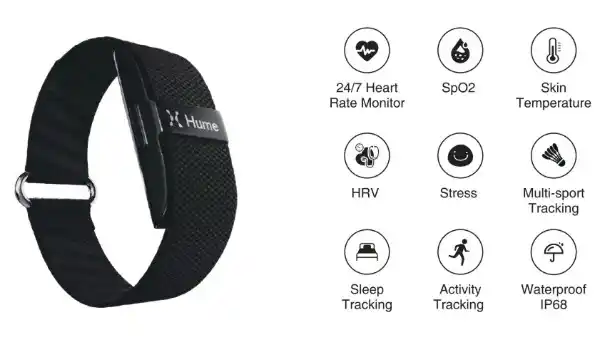
I don’t utilize all metrics, but there are three that are necessary:
- Heart rate (ECG Grade): For me to maintain control over my effort level.
- Sleep Analysis: To determine whether or not I am getting actual quality rest.
- HRV (Heart Rate Variability): It is the best way to measure whether or not your nervous system can manage stress.
My Top Choices for 2026
Here are some watches that I believe would be worthy recommendations to a friend.
Garmin Fenix 8 Series
It’s no secret that this watch is the clear leader. For serious use, I consider this watch without any drawbacks. Now, it even has the impressive MicroLED display that is very bright while not draining the battery.
Advantages: Impressive maps, up to 20 days of battery life, and new Satellite Messaging when out of range.
Disadvantages: It is expensive and can be bulky for small wrists.
Apple Watch Ultra 3
If you are an iPhone user looking for a universal watch, the Ultra 3 might become your best bet. The battery now offers decent autonomy at 48-72 hours, and there is even support for 5G and Satellite connections.
Advantages: The best screen, great apps, and accurate heart rate measurement.
Disadvantages: You still need to recharge the battery every few days, unlike Garmin and Coros.
COROS Apex 4 / Vertix 3
There is no denying that Coros is everyone’s favorite brand in ultra-runners’ circles because they prioritize efficiency. With their latest product, the COROS Apex 4, weightlessness is combined with an impressive battery life.
Advantages: The “EvoLab” software is perfect for analyzing numbers and has a wonderful physical scroll dial.
Disadvantages: It lacks the aesthetic appeal of an AMOLED screen and has very basic smart features.
Suunto Vertical 2
The Suunto brand has gone all-in on the “Adventure” theme. Their newest product, the Vertical 2, features massive solar panels in the bezel area and some of the best offline topo maps ever.
Advantages: Durable as a Swiss Army knife, eco-friendly, and built for the mountains.
Disadvantages: The software synchronization can be slightly slower compared to the competition.
Who Is this Watch Right for?
No sugarcoating – this watch is not for everybody. These watches are high-quality equipment, not fashionable gadgets.
This Watch Will Do Wonders for You if:
- You train at least 4-5 times a week.
- Go from one sport to another (triathlon, cross-fit athletes, etc.)
- Like to go over the results, looking for ways to become faster.
- Spend plenty of time in the wild where your phone’s GPS doesn’t work.
This Watch Probably Isn’t What You Need if:
- You only want to achieve your goal of 10,000 steps per day.
- You mostly train in a fancy gym, where no GPS is needed.
- Just need something that would tell you what time it is and show you notifications.
In which case, a regular fitness tracker or even an Apple/Samsung watch is enough for you.
My Mistakes and How to Avoid Them
I have certainly made many mistakes, spending a lot of money on equipment that was never used beyond being put away in a drawer. Below is some advice from my experience.
- Buy Only for What You Need: Just because everybody uses the Apple Watch in the gym does not necessarily mean that this is the right gadget for your 50 miles of biking. Think about your needs and priorities.
- Disregarding the Ecosystem: Don’t buy an Apple Watch if you have an Android smartphone. Make sure you can work with the Strava app easily by using its compatibility with your smartwatch.
- Wasting Money for Something You Will Not Need: Does it make sense for a non-professional athlete to pay the extra $200 for features such as “Advanced Running Dynamics”? Unless you are aware of their necessity, avoid buying expensive options.
- Style over Functionality: A sleek device will be impressive at dinner, but it will be useless when you cannot find what you need to do on a very tiny screen.
How I Use It on a Day-to-Day Basis
It’s not only for exercising purposes. I use it to replace multiple other devices.
- Reducing Stress: Whenever I have an important business conversation that causes me stress, I resort to using the “Relaxation” or “Breathing” programs. Watching my heart rate rise right in front of me serves as an excellent reminder to take a deep breath.
- Monitoring Sleep: For a long while, I believed that I slept 8 hours. The watch revealed to me that I get 6.5 hours of sleep. The shocking revelation made me reconsider my “winding down” process.
- Contactless Payment: Going for a walk without my wallet but still managing to pay for a drink or some water with my arm is something I couldn’t do without.
Filtering the Data
There are many things to track with the smartwatch. Actually, there are too many things to keep track of. You risk wasting more time analyzing graphs than exercising. I’ve found how to sift through the information.
These are the metrics I pay attention to:
- Training Load: Is my training volume higher or lower compared to last week?
- Rest: Does my smartwatch suggest I should rest for 24 hours? In most cases, it is correct.
- Heart Rate Zones: Do I run easy enough according to my training plan, or do I overdo it?
The “Fitness Age” and “Race Predictor” numbers are interesting, but I don’t pay any attention to them.
I pay attention to:
- Training Load: Have I increased or decreased my workload compared to last week?
- Recovery Time: Does the watch suggest I need a full 24-hour recovery period? It usually does.
- Heart Rate Zones: When I run at an easy pace, am I really running easy, or have I gone beyond?
Lessons I Have Learned Along the Way
- Consistency Beats Technology: The most expensive watch ($1,000) won’t turn you into an athlete; the least expensive ($200), but one that you wear all the time, will.
- Comfort Comes First: If the watch feels too bulky and/or its band chafes your wrist, then it ends up on the nightstand; always test drive a watch by weighing it.
- Simple Is Sometimes Better: The best workouts take place when I pay attention only to two metrics – time and heart rate.
Conclusion
I have found that using the multisport GPS smartwatch has definitely positively impacted my practice both for sports training and exercise. I now consider myself practicing, rather than exercising, which means that all actions and activities have become more precise and enjoyable.
However, the main point is picking the one that is right for you, not just the best-selling model from ads or the same one as used by some influencer. The smartwatch should be comfortable for your wrist and compatible with your smartphone.
Finally, the best one will be one that becomes invisible while you are pushing yourself, and gives you useful information right when you need it.
hard?
The numbers of “Fitness Age” and “Race Predictor” are of little interest to me, although it is entertaining to watch them change.

3 thoughts on “Best Multisport GPS Smartwatch: My Complete 2026 Guide”