Introduction
In the past year, I’ve tested quite a few smartwatches. A number of them impressed me from the first minute. Some had nice features, but wearing them proved to be another story.
I also began to test running watches at some point. That’s where things became really exciting.
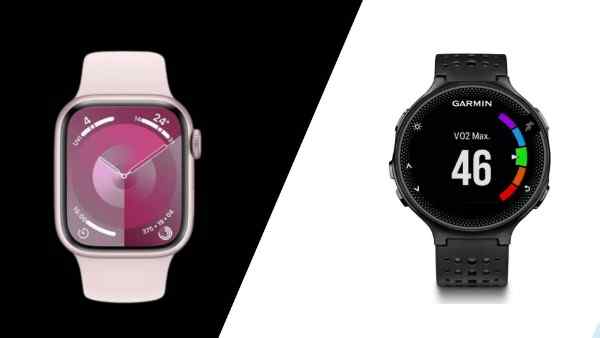
From the outside, both devices look quite alike. They track exercise progress. They can be worn on your wrists.
Once you start using them, the difference is certain to hit you.
I tested both watches for several weeks. On some days, I wore a smartwatch. On other days, I preferred using a running watch.
In the end, I realized what each of them is good for.
The most surprising thing was this: often, the device that worked better was not necessarily more featured. It was simply a better match to the user’s needs.
And there lies the mistake of most buyers. They purchase based on features instead of usage.
This Guide Will Tell You About:
- My experience with both types of watches
- Real differences between them
- Which one fits running best
- Weaknesses of each watch
- Choosing one based on your requirements
How I Tested Both Watches
I tried both watches for several weeks. It’s an important factor since the first impression may be deceptive.
I focused more on practical use than on features.
I took into account the following things:
- Comfort during all-day wearing
- Precision during the workout and training sessions
- Heart rate stability
- Sleep tracking precision
- Efficiency of the battery in everyday conditions
- App usability
What is also crucial – I wore both watches during the same training. In other words, I compared watches during the same activity.
I did the same test many times, but, for example, I measured the 5K run during which both watches provided different results.
The difference is small, but when we speak about dozens of training sessions per week – every little helps.
Also, I tried both watches on rest days – an aspect that is not always taken into consideration.
Also Reas : Best Fitness Tracker in 2026: Reviewed, Tested, and Compared
Smartwatch VS Running Watch – The Bottom Line
In other words,
- The smartwatch is better suited for day-to-day use
- Running watches are more appropriate for exercising
However, it’s much more complicated than that.
One person buys a smartwatch instead of a running watch only to discover its inability to substitute for an exercise gadget.
Another opts for a running watch and then regrets missing out on such things as notification functions.
Ultimately, the choice should be based on personal life and training habits.
Most importantly, on whether you are willing to use them actively.
Because a watch that sits idle on a table is no good.
What Is a Smartwatch?
First off, a smartwatch should interact with a smartphone.
It receives notifications and tracks physical activity. Plus, you can install apps in it and perform various tasks on it.
All those functions sound really cool. And they actually are.
With the help of the smartwatch, you can receive texts, play music, make/receive phone calls and pay for things.
You don’t need to constantly check your phone.
In this way, you save yourself some time.
The drawback here is obvious.
Because it is multifunctional, a smartwatch cannot monitor one’s fitness activities.
Running Watch – What Does It Entail?
The running watch is centered around training.
That’s all.
It monitors your speed, distance, heart rate, cadence, and recovery.
It does not aim to rival your smartphone – it only helps with your training.
This is what makes all the difference.
It doesn’t have to overwhelm you with features that will do nothing for you. You simply get relevant stats and data that contribute to improving your training.
And then with time, you gain something valuable out of it.
You begin to notice trends:
- Your speed is improving
- Your recovery is low
- Your heart rate is elevated
All of this is hard to recognize on a universal tool.
Also Reas : Best Multisport GPS Smartwatch: My Complete 2026 Guide
Design and Comfort
People don’t know how significant it is.
If the watch does not fit you comfortably, then you will stop wearing it altogether.
And if you don’t use the watch, then nothing really matters.
Always check the following factors:
- Weight
- The quality of the straps
- The size when worn
The appearance of smartwatches looks better.
They seem more polished and elegant.
They can be worn at both work, informal events, and formal parties without hesitation.
Sportswatches weigh less and have more functionality and practicality.
Wearing them to do some exercises, they give less weight, and you forget about them.
And this is important during long training.
Tip: You should not wear watches that require constant adjustments during the day.
The Difference in Accuracy During Runs
Here lies the difference.
Running watches are just more accurate.
It was obvious during testing:
- GPS connectivity was quicker
- Distance calculation remained constant
- Pace calculation was dependable
- Heart rate did not fluctuate
Smartwatches can be used while working out casually. But then again, in case of a serious run, smartwatches might come in the way.
For instance, during interval workouts, I observed slight lag times in pacing calculation on smartwatches.
On its own, this issue may not seem significant. However, if you have a specific pacing goal, even slight lag times can be annoying.
While such a discrepancy may not affect beginner runners, it will make itself apparent during frequent training.
Accurate data promotes confidence. Once that’s gone, smartwatches become irrelevant.
Health & Fitness
The first category shares the health functions with running smartwatches. However, they differ in implementation.
While health smartwatches monitor general well-being, running watches concentrate on improving performance:
Smartwatches:
- Heart rate
- Sleep
- Stress
- Activity
Running watches:
- Training load
- Recovery
- Estimated VO2 max
- Training intensity
There is one aspect, however, which I found intriguing.
Many smartwatches offer too many health features for a user. Scrolling through numbers and charts, you do not make any real use of them.
They may look amazing. Still, after some time, you will forget about them.
This issue does not exist with running watches.
There is more sense in their health data.
Battery Life Comparison
Battery life is probably the most important difference between the two options.
The battery life of a smartwatch may be:
- 1–2 days
While the battery life of a running watch is usually:
- Several days
- Or even weeks
This will affect the way you interact with your watch.
For a smartwatch, charging will become an essential task. It will become a habit.
It will be something you will always keep in mind. Should you charge it before sleeping or after work?
But with a running watch, you won’t have any concerns with the battery at all.
Neither when I was jogging a long distance nor on any trip.
Features that Matter and Those Which Are Not Needed
Smartwatches have numerous capabilities:
- Notifications
- Calls
- Apps
- Music
- Payments
That sounds amazing indeed!
But what I want to ask is how many of them do you use?
I’ve been using just a couple of features. Notifications and music worked for me. The others – not so much.
Even notifications can sometimes distract you.
During your workout sessions, less distraction can be more productive.
And running watches come without all of those distracting features. And honestly, there was no need to use them while exercising.
Quite the contrary; it helped matters improve.
Also Reas : Top Smartwatches For ladies In 2026
Ease of Use & User Experience
Many people overlook this aspect. But that’s a mistake.
The usability and efficiency of any gadget depend greatly on the app.
I’ve tried some apps which seemed too complicated. Too many numbers. Too many options.
And the next time you’d be opening it – never again.
And there are apps that are clear and intuitive. Open an app and see all your data clearly.
Running watch apps mostly display data related to your workout sessions.
A smartwatch is intended to supply you with complete information.
But if you don’t understand it, then what’s the use?
So Which One Is Better for You in Your Everyday Life?
For daily use, smartwatches are definitely a better choice.
They will seamlessly integrate into your schedule.
Their appearance is more versatile compared to running watches.
They have fewer technical problems when working with smartphones.
It is easier to access all information.
And it becomes convenient with time.
A running watch will be somewhat inappropriate in everyday life unless you like its design.
Which One to Choose?
Choose a Smartwatch if:
- You are looking for diversity
- You pay attention to how your wristwatch looks
- You need notifications
- Your workouts are not really hard
Select a Running Watch if:
- You run often
- You value precision
- You require extended battery life
- Your priority is performance
Common Errors People Commit Regularly
The same errors kept repeating themselves again and again:
- Acquiring a running watch without even engaging in a jog
- Getting a smartwatch when professional monitoring is desired
- Paying for features that remain unused
A typical mistake is:
Choosing a watch on the basis of a review without analyzing its requirements.
While something works for others, it may not work for you.
A useful rule to consider is:
Being realistic about their routines.
Not plans but present habits.
Conclusion
I have owned both kinds of watches for quite some time.
And in my experience, one thing stands out. There is nothing perfect. There is only one suitable.
If convenience and other features matter to you, choose a smartwatch. This type works much better in your everyday routine.
On the other hand, if you value running and performance, choose a running watch without any doubts.
The bottom line? The most advanced and feature-rich smartwatch may not always be your best option.
Not if you can’t stand it on your wrist at all times. Not if you hardly ever use its functions.