I’ve worked with homeowners and small businesses who want one thing: less friction in daily life. That’s where the benefits of home automation become clear. It’s not about fancy gadgets. It’s about saving time, reducing waste, and staying in control without extra effort.
I’ll keep this practical. No hype. Just what actually changes when you set things up properly.
Table of Contents
ToggleWhat you’ll learn in this guide:
- How automation simplifies daily routines
- Where real cost savings come from
- How it improves home security
- Why centralized control matters
- What personalization really looks like
- How it supports accessibility
- Whether it adds value to your property
- What to expect before getting started
What I Mean by Home Automation
I define it simply.
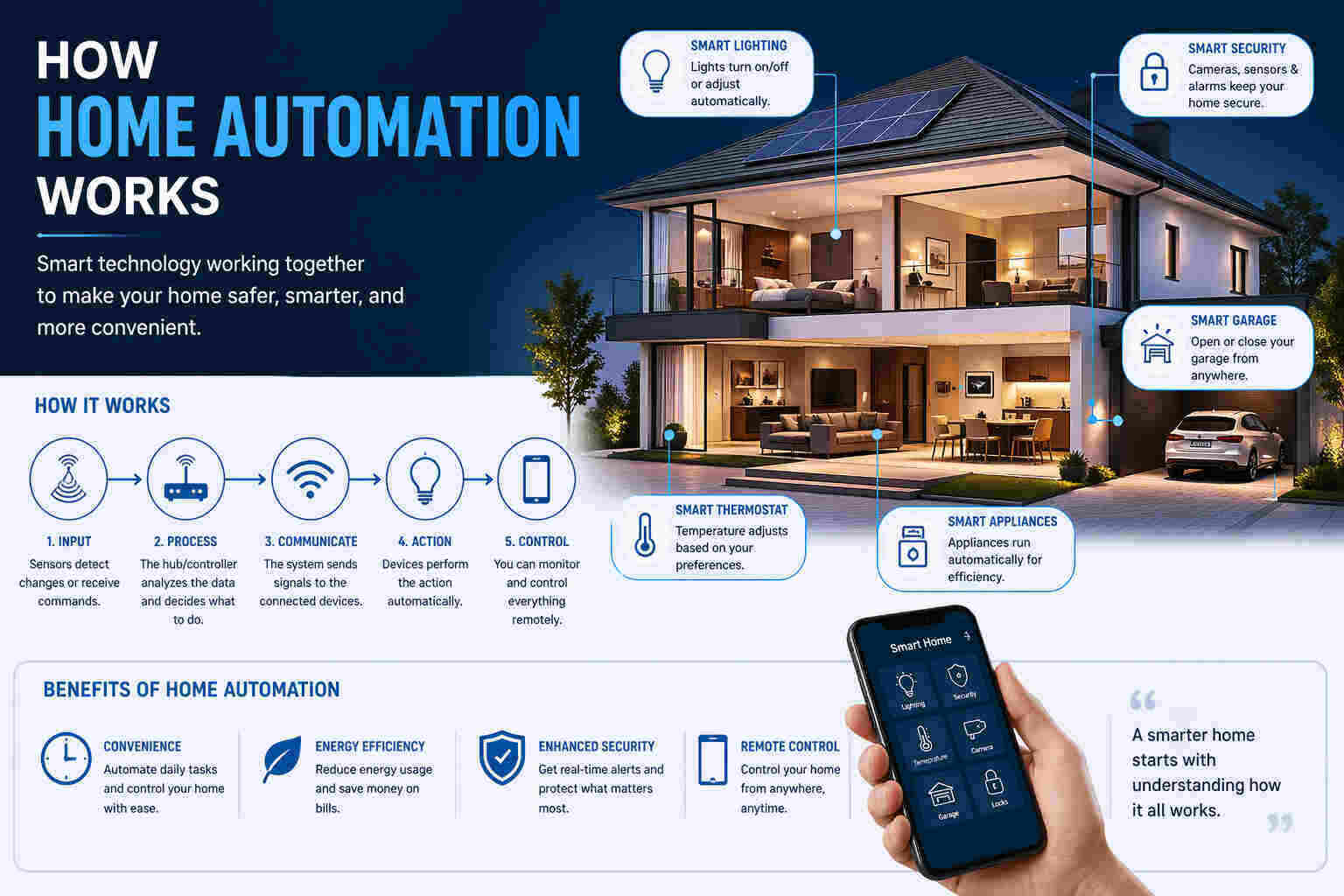
It’s a system where devices in your home work together and respond automatically based on rules, schedules, or commands.
That includes:
- Lighting
- Heating and cooling
- Security systems
- Appliances
Most setups connect through a mobile app or voice assistant. If you’ve ever turned off lights from your phone while already in bed, you’ve already experienced a small part of it.
1. Benefits of Home Automation: Simpler Daily Life
This is usually the first thing my clients notice.
I remove small repetitive tasks.
Lights turn off automatically. Temperature adjusts on its own. Doors lock without double-checking.
You stop thinking about these things.
Example:
- You leave home → system turns off lights, lowers heating, arms security
It’s not dramatic. But it adds up.
And yes, you’ll still forget something occasionally. You’re human. The system just covers most of it.
2. Centralized Control Makes Everything Easier
Before automation, devices act separately.
After setup, everything runs through one interface.
I usually recommend:
- One app
- One dashboard
- One system
You can control:
- Lights
- Temperature
- Cameras
- Blinds
All from one place.
If you want a deeper look at how remote access works, I’ve explained it here:
home control
This is where things start to feel efficient instead of scattered.
3. Real Cost Savings (Not Marketing Claims)
Let’s be clear.
Automation doesn’t magically cut bills in half. But it does reduce waste.
Where I see real savings:
- Heating and cooling adjustments
- Lights turning off automatically
- Smarter energy usage patterns
For example:
- Heating lowers when no one is home
- Lights don’t stay on overnight
If energy efficiency is your priority, I’ve covered this in more detail:
saving smart home
Over time, these small changes reduce unnecessary usage.
4. Better Comfort Without Extra Effort
This is where people start to enjoy it.
You don’t adjust your home manually anymore. It adjusts itself.
Example:
- Lights match the time of day
- Temperature stays consistent
- Curtains open automatically in the morning
I often set up simple routines like:
- Morning mode
- Night mode
You press one button. Everything responds.
It’s not luxury. It’s convenience done right.
5. Improved Home Security and Peace of Mind
Security is a big reason people start.
And it works.
With automation, I can connect:
- Cameras
- Motion sensors
- Smart locks
- Alerts
What changes:
- You get real-time notifications
- You can check your home remotely
- You can simulate presence when away
Example:
- Lights turn on randomly while you’re traveling
That alone can discourage unwanted visitors.
For voice-based systems, this integrates well with platforms like:
Alexa home automation advantages
Security becomes active, not passive.
6. Full Control From Anywhere
This is one of the most practical benefits of home automation.
You’re not tied to your house.
You can:
- Turn off appliances remotely
- Check camera feeds
- Adjust settings before arriving home
I’ve had clients:
- Turn off ovens from the office
- Unlock doors for deliveries
It’s useful. And sometimes, it saves you from driving back home just to check something.
7. Personalization That Actually Works
Most people think customization is complicated.
It’s not—if done properly.
I usually create simple “scenes”:
- Arrival home
- Leaving home
- Sleep mode
Example:
- You arrive → lights on, temperature adjusted, music starts
You don’t need 20 automations. You need the right 4–5.
For ecosystem-based setups, systems like:
HomeKit benefits
Home smart home benefits
help keep everything consistent.
The goal is simple: your home behaves the way you expect.
8. Accessibility and Ease of Use
This is often overlooked.
Automation helps people who:
- Have mobility challenges
- Prefer voice control
- Need quick access to functions
With voice assistants, you can:
- Turn lights on
- Adjust temperature
- Lock doors
No movement needed.
This adds independence. And that matters more than most features.
9. Flexibility and Compatibility
A good setup grows over time.
I always recommend starting small.
Then expanding.
Modern systems allow:
- Adding new devices later
- Mixing different technologies
- Updating features without replacing everything
You don’t need to build a full system on day one.
In fact, you shouldn’t.
Start with:
- Lighting
- Thermostat
Then build from there.
10. Property Value and Long-Term Benefit
This is where automation becomes an investment.
Homes with smart features:
- Attract more buyers
- Stand out in listings
- Offer practical value
I’ve seen buyers specifically ask for:
- Smart lighting
- Security systems
- Energy-efficient setups
It won’t double your property price. But it makes your home more appealing.
And in competitive markets, that matters.
Real-Life Use Cases I See Often
Here’s how people actually use it:
Morning Routine
- Lights turn on gradually
- Temperature adjusts
- Coffee machine starts
Leaving Home
- Lights off
- Doors locked
- Security activated
Night Routine
- Lights dim
- Curtains close
- System arms
These aren’t complex setups.
They’re simple. And they work.
Are There Any Downsides?
Yes. And I always mention them.
- Initial setup cost
- Learning curve
- Compatibility issues (if you mix random devices)
But most problems come from poor planning.
If you keep it simple, these issues stay manageable.
Is It Worth It?
I don’t recommend automation for everyone.
But it makes sense if:
- You want to reduce daily effort
- You care about energy efficiency
- You want better control over your home
If you’re expecting magic, you’ll be disappointed.
If you’re looking for small, consistent improvements, it delivers.
Getting Started (My Simple Approach)
I suggest this order:
- Smart lighting
- Smart thermostat
- Basic security
- Central control system
Avoid overbuilding early.
Start small. Learn. Expand.
Final Thoughts
The benefits of home automation are practical.
You save time. You reduce waste. You stay in control.
That’s it.
No need to overcomplicate it.
If your home can handle tasks for you, even a few, that’s already a step forward.