Breaking Down Smart Home Myths Through My Practical Experience
Over the past few years working in SEO and digital marketing, I’ve noticed that interest in smart home technology is growing rapidly. However, I’ve also noticed something interesting—many people hesitate to adopt it because of common smart home myths they still believe.
I’ve had conversations with homeowners, professionals, and even tech-curious users who all share similar concerns. Some think it’s too expensive, others believe it’s too complicated, and a few even assume it’s unsafe or unnecessary.
The truth is, most of these beliefs come from outdated information or partial understanding. In this article, I’ll break down the most common smart home myths, explain what’s actually true, and share insights based on real-world usage and industry observation.
What you’ll get from this guide:
- A clear breakdown of major smart home misconceptions
- Real explanations behind each myth
- Practical insights based on real usage patterns
- Simple guidance for beginners considering automation
Why Smart Home Myths Still Exist
Before addressing the myths themselves, it’s important to understand why smart home myths are still so common today.
From what I’ve observed, there are a few key reasons:
- Early smart home systems were expensive and complex
- People still rely on outdated opinions and assumptions
- Marketing confusion often exaggerates complexity
- Lack of hands-on experience with modern devices
Technology has improved significantly, but public perception hasn’t fully caught up yet. That gap is where most smart home myths continue to grow.
Common Smart Home Myths You Should Stop Believing
Now let’s go deeper into the most widespread smart home myths and what the reality actually looks like.
Myth 1 – Smart Home Systems Are Too Expensive
This is one of the most repeated smart home myths, and I understand why people believe it.
Many assume building a smart home requires thousands of dollars upfront. That may have been true years ago, but things have changed significantly.
Today, you can start with very affordable devices like:
- Smart bulbs
- Smart plugs
- Entry-level automation switches
What most people don’t realize is that smart home systems are now highly scalable. You don’t need to automate everything at once.
In fact, I often suggest starting small and expanding gradually. This makes automation more budget-friendly and less overwhelming.
So, when we look at this smart home myth, the reality is simple: smart homes are flexible, not financially restrictive.
Myth 2 – You Need Technical Skills to Use Smart Homes
Another common belief in the list of smart home myths is that you must be highly technical to operate these systems.
In reality, modern smart home systems are designed for everyday users.
Most devices today operate through:
- Simple mobile apps
- Voice assistants
- One-touch controls
I’ve personally seen people with zero technical background set up smart devices within minutes. If you can use a smartphone, you can manage a smart home system comfortably.
This makes this particular smart home myth one of the easiest to disprove in real-world usage.
Myth 3 – Smart Homes Are Not Secure
Security concerns are one of the most emotionally driven smart home myths.
People often imagine hacking, data theft, or privacy invasion. While no connected system is 100% risk-free, modern smart home ecosystems are built with strong security layers.
Most systems include:
- Encrypted communication
- Regular firmware updates
- User-controlled permissions
In practice, most security issues come from poor password habits, not the technology itself.
So this smart home myth is more about user awareness than system weakness.
Myth 4 – Smart Homes Are Just a Temporary Trend
This is one of the more long-standing smart home myths I still hear occasionally.
Some people believe automation is just a passing trend that will fade over time. But when you look at how deeply integrated it has become in modern living, that idea doesn’t hold up.
Smart home systems are now used for:
- Security monitoring
- Energy management
- Daily convenience tasks
Rather than fading away, the technology is becoming more embedded in everyday life.
So this smart home myth doesn’t match current adoption trends or future projections.
Myth 5 – Smart Homes Consume More Electricity
This is another widely believed smart home myth, but it’s actually the opposite in many cases.
Smart devices are designed to improve energy efficiency, not waste it.
For example:
- Lights turn off automatically when rooms are empty
- Appliances can be scheduled or remotely controlled
- Energy usage can be monitored in real time
In many cases I’ve observed, users actually report lower energy bills after switching to automation systems.
So this smart home myth is not supported by real-world performance.
Myth 6 – Smart Homes Are Only for Large or Luxury Houses
Many people still assume smart homes are designed only for big villas or luxury properties, which is another common smart home myth.
In reality, smart home systems are fully scalable.
Whether you live in:
- A small apartment
- A mid-sized home
- Or a large property
You can still implement automation effectively.
Most modern systems are wireless and don’t require major renovations, which makes them suitable for almost any living space.
This makes this smart home myth outdated in today’s market.
Myth 7 – Smart Technology Becomes Obsolete Quickly
One of the more technical smart home myths is that devices quickly become outdated and unusable.
While technology does evolve, smart home systems are designed to adapt over time.
Most ecosystems:
- Receive regular software updates
- Support new device integration
- Allow gradual system expansion
This means your system can grow instead of becoming obsolete.
So rather than being short-lived, smart home setups are increasingly long-term investments.
Real Benefits Behind Smart Home Technology
Once I started looking past the common smart home myths, the real value of smart home technology became much clearer. What initially feels like a “nice-to-have” upgrade actually turns into something that quietly improves everyday living in practical, noticeable ways. It’s not about futuristic ideas—it’s about simple daily comfort, better control, and less effort in routine tasks.
Below are the real-world benefits I’ve seen and experienced when smart home systems are used properly.
Convenience in Everyday Life
One of the first things people notice after using smart home systems is how much easier daily routines become.
Tasks that used to require manual effort—like switching lights on and off, adjusting room temperature, or checking security locks—can now be handled automatically or with a single command. Even small actions start to feel smoother and more effortless.
For example:
- Lights can turn on automatically when you enter a room
- Fans or air conditioning can adjust based on temperature
- Doors and appliances can be controlled remotely
It might sound simple, but over time, these small conveniences add up. Many people only realize the value after they stop doing these repetitive tasks manually.
This directly challenges many smart home myths that suggest automation is complicated or unnecessary.
Better Energy Management
Another major benefit that often gets overlooked is energy efficiency.
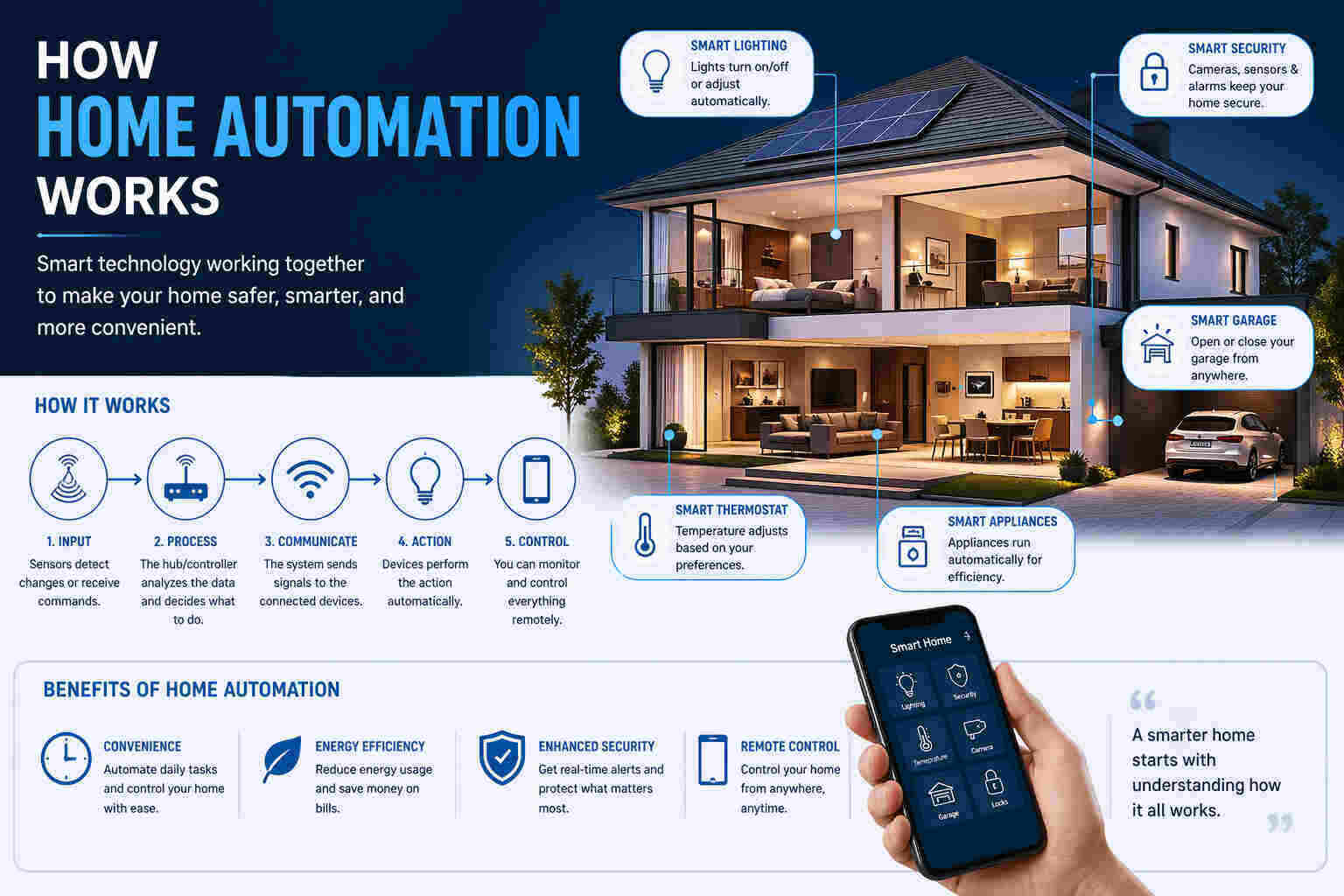
Smart home systems are designed to reduce unnecessary power usage without you actively thinking about it. Instead of relying on manual control, devices can respond intelligently based on usage patterns or settings.
Some practical examples include:
- Lights turning off automatically when no one is in the room
- Appliances running only when needed or scheduled
- Smart thermostats adjusting temperature based on occupancy
What I’ve noticed is that this kind of automation doesn’t just improve convenience—it also helps reduce waste. Over time, this can lead to more controlled and efficient energy usage in the household.
This is also where several smart home myths fall apart, especially the belief that smart homes increase electricity consumption. In reality, they often do the opposite when set up correctly.
Improved Security
Security is one area where smart home technology has made a noticeable difference.
Instead of relying only on traditional locks or manual checks, smart systems provide real-time monitoring and instant alerts. This gives homeowners more awareness and control over their environment, even when they are away.
Common security features include:
- Remote monitoring through mobile apps
- Instant notifications for unusual activity
- Smart locks with access control options
- Camera feeds accessible from anywhere
What makes this especially useful is the ability to respond quickly. Whether you are at work, traveling, or simply in another room, you can stay connected to your home environment.
Many smart home myths suggest that these systems are insecure or easily hacked, but modern platforms use encryption and regular updates to strengthen protection. In most cases, security depends more on user setup than the technology itself.
Time-Saving Automation
Time-saving is probably one of the most underrated advantages of smart home systems.
We often don’t realize how much time is spent on repetitive daily tasks—turning devices on and off, adjusting settings, checking appliances, or managing home routines manually.
Smart automation helps reduce that load significantly.
For example:
- Morning routines can be automated (lights, coffee machines, alarms)
- Evening settings can adjust automatically for relaxation
- Multiple devices can be controlled together with a single command
Over time, this creates a smoother daily flow. Instead of constantly managing small tasks, you can focus on more meaningful activities.
This practical benefit directly contradicts many smart home myths that suggest automation is unnecessary or only about luxury.
How I Recommend Getting Started with Smart Homes
Based on my experience, the best way to approach smart home adoption is simple and gradual.
Here’s what I usually suggest:
- Start with one or two basic devices
- Choose a reliable ecosystem (Google, Alexa, etc.)
- Expand only when needed
- Focus on solving real daily problems
This approach helps avoid confusion and removes many fears created by smart home myths.
Final Thoughts on Smart Home Myths
After analyzing and working around digital technology trends, I’ve realized that most smart home myths exist because people haven’t experienced modern systems firsthand.
Once you actually use smart home devices, most of these concerns quickly disappear. What initially seems complicated often turns out to be surprisingly simple, practical, and even enjoyable.
The biggest shift happens when people stop believing in smart home myths and start experiencing the real benefits of automation in their daily lives.