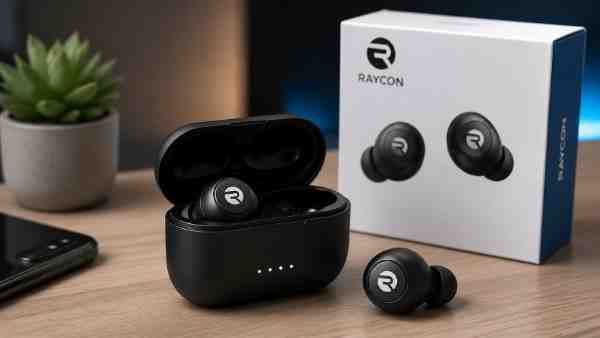
I was always seeing Raycon earbuds everywhere. YouTube ads. Social posts. A lot of bass talk. A lot of “five-star” talk. A lot of “these are just as good as the expensive ones” talk. So I checked Raycon’s current product page, real buyer feedback on Amazon, WIRED’s review, and SoundGuys’ review to answer one simple question: are Raycon earbuds actually worth my money?
For some, yes, for others, no is my short answer. But for users who want basic earbuds with a compact size, casual listening, or riding the train, and don’t do good workouts, Raycon earbuds may be sensible. If I care most about sound accuracy or I hate even the hint of connectivity drama, I would compare them with alternatives before I buy.
Here is what I will cover:
- My quick verdict on Raycon buds
- How the sound, fit, and comfort stack up
- What I think about battery life, ANC, and call quality
- The main complaints buyers keep bringing up
- Who should buy Raycon earbuds, and who should skip them
- Better alternatives if my budget or priorities are different
My quick answer
My quick take is that Raycon’s buds live in the “good enough for many people” lane. That sounds plain, because it is plain. They are not a secret giant-killer. They are also not automatic junk. The current official page for the Everyday Earbuds Classic pushes a very clear pitch: active noise canceling, awareness mode, a compact fit, IPX4 weather resistance, two microphones, Bluetooth 5.4, about 9 hours of play time, and about 36 hours total with the case. That is a respectable feature set for daily use. If I want simple earbuds for work, errands, the train, and a few gym sessions each week, I can see the appeal fast.
My second quick take is less flattering. Amazon’s current US listing for the same product line shows a 4.3-star average from 29,918 global ratings, carries “Amazon’s Choice,” says 6K+ bought in the past month, and repeats the familiar benefit stack: ANC, IPX4 sweat and water resistance, Bluetooth 5.2, and up to 32 hours of battery life. That sounds strong, but Amazon’s own customer summary blocks also show mixed sentiment on reliability, battery life, fit, value, and connectivity. So my real answer is this: Raycon buds are not a blind-buy product for me. They are a “read one more section before checkout” product.
One more thing matters to me before I buy any audio gear: support after the sale. Raycon’s live page says direct purchases from its site come with a 30-day satisfaction guarantee and a one-year limited warranty after that window. Trustpilot’s current profile also shows a lot of recent praise aimed at customer service and replacement help, even though there are still negative reviews mixed in. That does not erase product concerns. It does mean I am less worried about being stuck with a dead earbud and a sad charging case if something goes wrong.
What I like about Raycon earbuds
Comfort is the clearest plus. WIRED said the reviewed pair was small and comfortable, and noted that four pairs of ear tips helped with fit. SoundGuys also called the product comfortable, lightweight, and well-suited to exercise. I like that overlap because it does not depend on marketing language alone. When separate reviewers land on the same positive, I pay attention. My ears are not impressed by ad budgets. They just want peace.
I also like the compact case angle. WIRED described the case as egg-shaped, pocketable, and wireless-charging friendly. Raycon’s current page still leans on that same portability idea with “pocket-sized sound for active days.” That matters more than people admit. A lot of earbuds sound fine until the case turns into a weird little brick that never sits nicely in a pocket. If I want something I can carry all day without noticing it, Raycon buds do seem to understand that part of the job.
Battery life is also decent, even if the public numbers are messy because versions and seller listings do not line up perfectly. Raycon’s current page says about 9 hours on the buds and about 36 hours total. Amazon says 8 hours plus 24 in the case for 32 total. SoundGuys measured 6 hours and 43 minutes at 75 dB on an older reviewed version, while WIRED described roughly 8 hours on the buds with about 24 from the case on the late-2022 model. My honest reading is simple: Raycon buds do not lead the market in battery, but they should be enough for normal daily use, commuting, and moderate gym time.
For workouts, I think Raycon buds make a fair case. WIRED liked an older IPX6 version for gym use, and SoundGuys also framed the product as workout-friendly. IPX6 is supposedly more aggressive than what was covered by older reviews, but the latest official and Amazon pages now list IPX4 instead, which still protects you against sweat and light rain, though not to as high a standard in theory. I’d be okay with that If My use is primarily lifting, brisk walks, time on a treadmill, and other indoor cardio. If I run outside a lot, sweat heavily, or want more secure sports-first designs, I would also check this site’s guide to the best earbuds for working out before I commit.
Where I think Raycon’s earbuds fall short
The biggest weak spot is sound quality, and this is where public opinion stops being polite. WIRED was fairly positive and said the sound was bassy but decent for the money. SoundGuys was much harsher and argued that the sound tuning was bad enough to undercut the product’s other strengths. That split tells me something useful. For buyers who want bassier, more casual sound, it probably makes sense to look at Raycon’s buds; buyers wanting cleaner tuning, detail, and balance in frequency response are likely better off elsewhere. The playlist is also relevant if My leans more towards gyms, podcasts, or general streaming. If my playlist is where I get fussy, I would listen to the warning lights.
The second issue is consistency. Amazon’s review summaries call out mixed reliability and mixed connectivity. Trustpilot’s profile has plenty of happy buyers, but it also includes fresh complaints about charging problems, earbud failures, and shorting out. That pattern is not rare enough for me to ignore. I do not assume every pair of Raycon earbuds will misbehave. I do think the buyer should go in with open eyes instead of influencer sparkles in both pupils.
There is also a version problem, and I think this is one of the best angles for your SEO page. WIRED said Raycon updated these earbuds without really telling anyone and reviewed a late-2022 model. SoundGuys said Raycon had a habit of quietly releasing new versions with the same look and name, then re-reviewed what was effectively the old E25 as the Everyday model.
Raycon now describes its available option as Everyday Earbuds Classic and sporting Bluetooth 5.4 with roughly 36 hours total, whereas Amazon still indicates Bluetooth 5.2, along with as much as half an hour total. Many searchers are reading some conflicting sources about varying states of a pair and likely assuming they all mean the same pair. That confusion is real, and a page that clears it up has genuine value.
How I would compare Raycon earbuds with rivals
If my main goal is value, I would not buy Raycon earbuds without checking cheaper or stronger alternatives first. WIRED said it would still probably go with cheaper JLab buds for some buyers. SoundGuys went further and pointed readers to alternatives like the Edifier TWS1 and Samsung Galaxy Buds Plus, arguing that better-sounding options existed at similar or lower prices. That is a big reason I would also browse this site’s best budget earbuds guide before I spend close to the Raycon price band. Sometimes the smartest move is not buying the pair with the loudest ad read.
If my main goal is noise blocking, I would compare Raycon buds with newer ANC-first pairs rather than assume the name alone settles it. The official page and Amazon listing both promote ANC and awareness mode, which is good. Still, dedicated ANC competitors often win on refinement, app support, or consistency. If water and gym use are also big priorities for me, I would compare them with the site’s waterproof headphones recommendations too, because sweat resistance and all-day use can matter more than a shiny feature badge.
If my main goal is understanding why this brand keeps showing up in the first place, TechRadar gives useful context. It tied Raycon’s rise to YouTube sponsorships and framed the brand as a cheaper alternative to bigger names like Apple, Sony, Samsung, LG, and Google. That matters because the attraction of Raycon earbuds is not just audio quality. It is also visibility, style, price, and the feeling that I can get most of the daily-use features without paying flagship money. That pitch is strong. It just is not the same thing as “best sound for the money.”
Who I think should buy Raycon’s buds
I would buy Raycon buds if I wanted a compact case, a comfortable fit, simple controls, enough battery for real life, and a sound profile that leans more fun than fussy. I would also be more open to them if my day is built around commuting, office use, calls, errands, and some gym time instead of dedicated listening sessions where I want every little instrument to show off. For that type of buyer, the current Raycon pitch is easy to understand.
I would skip Raycon buds if I wanted the best sound quality in the price range, the safest long-term reliability bet, or the cleanest story around versions and specs. I would also be extra cautious if I were a picky Android buyer who cares a lot about codec support. SoundGuys pointed out that this reviewed unit used SBC and AAC, which is fine for iPhone use but not necessarily the best approach on Android, where users expect a more reliable, high-quality codec configuration. That sounds nerdy, right? It sure is nerdy. But the goblin in my head respects it anyway.
My final verdict on the Raycon buds
My final take is that Raycon buds are better than the internet’s laziest jokes, but weaker than the brand’s loudest fans tend to claim. The strongest case for them is clear: comfort, compact size, useful daily features, broad seller visibility, and enough battery for normal life. The weakest case is just as clear: sound quality is debated, reliability signals are mixed, and public coverage often blends older and newer versions without enough warning. WIRED came away more positive than expected; SoundGuys stayed much more critical; Amazon and Trustpilot show that buyers are very much not all having the same experience.
Now, would I purchase Raycon earbuds? So would I, but only for the right buyer. I could see myself justifying them as convenient everyday earbuds for work, running errands, and going to the gym if I enjoyed a bass-heavy sound. If I were going for the cleanest audio with the least chance of surprises, I would do a back-to-back comparison first, and then pore over the latest product page very carefully. Well, that’s not me anyway; my wallet would prefer that version of me.
FAQ
Are Raycon’s earbuds good for workouts?
My answer is yes for light to moderate workouts. WIRED liked an older IPX6 version at the gym, SoundGuys called the product well-suited to working out, and the current Raycon and Amazon pages list IPX4 weather resistance for sweat and light rain. I would still compare Raycon earbuds with more sports-first picks if secure fit and waterproofing are my top concerns.
Do Raycon’s earbuds have active noise canceling?
My answer is yes on the current Everyday Earbuds Classic pages from Raycon and Amazon. Both pages list active noise canceling and awareness mode. Older reviews discussed a prior version without ANC, so I would always check which product state a page is actually describing before I trust it.
How long does the battery last on Raycon’s earbuds?
My answer is “good, but check the version.” Raycon’s current page says about 9 hours of play time and about 36 hours total. Amazon says up to 32 hours total, with 8 hours on the buds and 24 more from the case. SoundGuys measured 6 hours and 43 minutes at 75 dB on the older reviewed version.
Are Raycon buds better than AirPods?
My answer is “it depends on what I care about.” WIRED said the reviewed Raycon pair was better than standard AirPods in some practical ways, mostly because of fit, seal, and value. I would still lean toward AirPods if I lived deep inside Apple’s ecosystem and cared most about that polished Apple experience. I would lean towards Raycon earbuds only if my budget mattered more and I liked the feature mix.
Why do some buyers complain about connectivity?
My answer is that the complaint is common enough to take seriously. Amazon’s current review summaries show mixed feedback on connectivity and reliability, and TechRadar also said users report connection issues and that it saw that problem in testing of Raycon’s higher-end Work earbuds. That does not prove every pair will fail. It does tell me that connection quality should be treated as a real watch point, not a one-off comment buried on page seventeen.
Are Raycon earbuds worth the money?
My answer is yes for comfort-first casual buyers and maybe not for sound-first picky buyers. The public evidence gives me a balanced picture: real strengths in comfort and convenience, but enough questions about sound and reliability that I would never buy blind just because an influencer sounded very confident between two meal-prep videos.