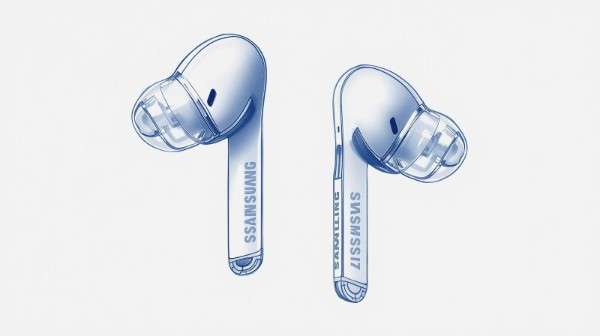
The one question that I see popping up like a jack-in-the-box is, is it actually going to be much more than another filing sparkle in Samsung’s eyes, or does the Samsung UWB earbuds patent really take some meaningful strides forward?
My answer is simple. It matters. But it matters for a very specific reason.
This patent is not just about swapping one wireless standard for another. My read is that Samsung is testing a path around Bluetooth’s limits while still using Bluetooth for pairing. That is smart. It feels less like a wild gamble and more like a practical bridge.
Here’s what I’ll cover:
- What the Samsung UWB earbuds patent actually says
- Why Samsung still starts with Bluetooth
- Whether UWB could give us true lossless wireless audio
- The biggest problems Samsung still has to solve
- The comparison of Samsung to Apple, Qualcomm, and Xiaomi
- Whether I think these earbuds are likely to ship
- What I would watch before calling this the next big thing
What the Samsung UWB earbuds patent actually shows
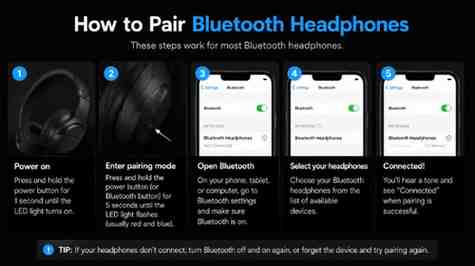
The Samsung UWB earbuds patent describes a hybrid setup. My phone or tablet would first connect to one earbud over Bluetooth. If the source device is capable of ultra-wideband, it would then transition to separate audio delivery over UWB links. Your right earbud obtains a UWB link from the source device, while your left earbud gets its own UWB link as well. As simple as that, Bluetooth kicks off the conversation, and UWB conducts the heavy audio traffic.
That matters because the Samsung UWB earbuds patent is not vague fluff. My take is that this gives the topic more staying power than a rumor post built on a blurry supply-chain whisper.
Samsung’s UWB earbuds patent also makes the goal very clear. But Samsung says it probably can’t satisfy demand for lossless high-fidelity sound. This line represents the heart of the narrative. Samsung is saying, in polite patent language, “Bluetooth is useful, but I want more.”
Another detail stands out to me. The filing is about wireless earphones and a control method, not just a codec upgrade. That suggests Samsung is thinking about system control, pairing, traffic flow, and stereo coordination together. That is a bigger play than changing one audio setting in the app.
Why did Samsung not fully dump Bluetooth?
This is the part I like most. The Samsung UWB earbuds patent does not pretend that Bluetooth is trash. Let’s read that as, because Bluetooth pairing between earbuds and phones/tablets/laptops is the easiest experience possible after all. A similar hybrid design can be seen in fast-moving coverage from Android Authority, TechRadar, SamMobile, PhoneArena, and Gizmodo.
That makes sense in the real market. Bluetooth is everywhere. Samsung’s UWB earbuds patent is not. If Samsung tried to make UWB-only earbuds tomorrow, support headaches would pile up fast. Great tech is fun. Great tech that people can actually pair in under thirty seconds is better.
The patent also hints at fallback logic. If the source device does not support UWB, the earbuds can still work in a mixed setup. That tells me Samsung is thinking about compatibility and not just perfect demo-room conditions.
If you were really praying for a headline of “Bluetooth is dead,” sorry to burst your bubble. Bluetooth is not dead. It is the opening act. It is the opening act. UWB is the part Samsung wants in the spotlight.
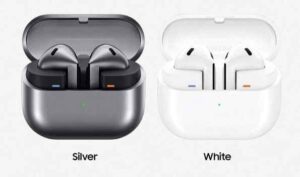
Why UWB sounds exciting for earbuds
Ultra-wideband already has a real job in tech. It is used for precise location awareness, finding tagged items, and digital-key style features. Samsung has supported UWB in parts of its ecosystem for SmartTag-style locating, and the FiRa Consortium describes UWB as a high-accuracy positioning technology with stable connectivity and low interference compared with narrowband systems. The radio is real. The new part is using it for earbud audio.
My excitement here comes from bandwidth and delay. Qualcomm aptX Lossless targets CD-quality lossless audio over Bluetooth, where Sony’s LDAC maxes out at 990 kbps. According to multiple coverage of the Samsung UWB earbuds patent, Samsung indicates it’s targeting roughly 20 Mbps for UWB audio transfer. That gap is why people keep talking about true lossless and maybe higher-resolution wireless listening.
There is also a cleaner stereo idea here. Instead of one earbud acting like a traffic cop and forwarding part of the stream to the second bud, the source device can speak to both buds more directly over UWB. My ears like simple systems. My battery usually does too.
I still would not oversell it. Just because Samsung’s UWB earbuds patent can carry more data does not mean a future Samsung product would transmit every bit uncompressed all the time. Companies love giving us a sports car and then asking us to obey school-zone rules.
The real obstacles Samsung has to solve
The first problem is device support. The source device needs UWB hardware too. That is a serious limit. Samsung-focused coverage and broader tech coverage both pointed out that UWB support is still mostly found in select premium phones, not across every Galaxy device or every Android phone. Samsung’s own SmartTag+ material also describes UWB as available only on select Galaxy phones.
The second problem is signal behavior around the body. Audioholics highlighted “body blocking” as a real issue for wearable UWB use. Heads, hands, jackets, bags, and train seats are not exactly polite radio environments. A setup that looks perfect on a patent diagram can act very differently in a crowded commute.
The third problem is cost. Extra radios, antennas, and tuning work do not usually make a product cheaper. I guess that if Samsung ever ships this idea, it will land in a Pro model first. Companies do not usually hide their costliest new trick inside the cheap version. That would be a shocking act of generosity.
The fourth problem is the oldest one in gadget reporting: a patent is not a launch. It is proof of interest, not proof of shipping. I have seen enough patents fly by like confetti to know better than to clear shelf space too early.
Who Samsung would really be competing with
The obvious rival is Apple, but the real fight is wider than “Galaxy Buds versus AirPods.”
Apple already offers lossless audio with ultra-low latency for some AirPods when paired with Apple Vision Pro, using a proprietary wireless audio protocol. That matters because it proves one big point. Major brands agree Bluetooth has limits, even if they pick different escape routes.
Qualcomm is another major rival, and this one may matter even more on the Android side. Qualcomm XPAN, a micro-power Wi-Fi solution that leverages existing Wi-Fi access points to stretch audio beyond Bluetooth distances (with Qualcomm claiming support for up to 24-bit/96 kHz lossless playback). Xiaomi has previously delivered a Buds 5 Pro featuring Qualcomm XPAN with the Xiaomi 15 Ultra, and as so often happens in such situations. Which means that while the Samsung UWB earbuds patent is just an application, Wi-Fi audio has already been taken to court.
That does not make Samsung late. It means the race is now real. Apple has a closed premium path. Qualcomm has a Wi-Fi path for partner brands. Xiaomi has a shipping product in that lane. Samsung’s play would be different. Use UWB, lean on Galaxy phones that already support UWB, and try to connect sound quality, low delay, and finding features in one package.
Samsung-focused outlets also point to another smart angle. If future Galaxy Buds ever gain UWB, they could improve finding features as well as audio. That is clever. People love great sound, but they also love finding the earbud they dropped under the couch five minutes before a call.
Is this about sound quality alone?
My view is no. Sound quality is the headline, but the Samsung UWB earbuds patent looks bigger than that.
The Samsung UWB earbuds patent can support lower delay. That matters for video, gaming, calls, XR, and head-tracked audio. Samsung sells phones, tablets, watches, TVs, and now newer Galaxy Buds with Bluetooth hi-res support. My hunch is that the bigger prize is a better multi-device media system, not just bragging rights over one codec chart. Samsung’s current Buds4 Pro page already leans hard into immersive audio, 360 Audio, HD voice, and ecosystem pairing, which tells me Samsung is already selling the broader experience, not just the codec story.
That is why I would keep one eye on Samsung’s XR and spatial-audio plans. Apple used its custom low-latency path first with Vision Pro. Samsung could push a similar idea inside its own ecosystem, where lip-sync, head tracking, and real-time audio response matter a lot.
So yes, audiophiles have a reason to care. But if I were betting on the first mass-market pitch, I would expect Samsung to sell the dream as smoother video sync, cleaner immersive sound, better gaming response, and smarter ecosystem behavior. “True lossless” sounds cool. “No lag and easy switching” usually sells faster.
Will Samsung launch these earbuds soon?
That is probably the most honest answer I can give you, but I certainly wouldn’t bet on an immediate launch.
Android Authority, TechRadar, SamMobile, Gizmodo, and PhoneArena all had many of the same base facts covered within a couple of days. That tells me the keyword has strong news intent. Audioholics later added a deeper April 2025 editorial that put the patent inside the longer story of uncompressed wireless audio and past UWB headphone attempts.
That history matters. Audioholics also pointed to earlier UWB headphone efforts tied to PSB, Sonical, and MQA that never shipped. So I do not want to act like the Samsung UWB earbuds patent means a launch is right around the corner. It means Samsung cared enough to protect the idea. That is meaningful, but it is still one step.
If I had to call it, I would say the best odds are a future Galaxy Buds Pro-tier product that works best with higher-end Galaxy phones. That would match the support limits, the likely price, and Samsung’s habit of keeping its flashier extras inside premium devices first.
My final take
I think the Samsung UWB earbuds patent is one of the more interesting earbud filings in recent memory because it tries to solve a real problem with a believable bridge. My device could still use Bluetooth to pair. My earbuds could then move into a higher-performance mode if both sides support it. That is much more believable than a total wireless reset.
I also think this Samsung UWB earbuds patent topic is stronger as an evergreen explainer than as a tiny news post. Samsung’s current Galaxy Buds4 Pro already promise 24-bit/96 kHz hi-res audio over Bluetooth through Samsung’s Seamless Codec, which means Samsung already sells premium audio language today. The UWB patent is the logical “what comes next” story.
So here is my short version. I would watch this closely. I would not treat it as confirmed hardware. But I would absolutely treat it as a serious sign that Samsung wants a better answer to wireless audio than “Bluetooth, but a little fancier.”
That alone makes the Samsung UWB earbuds patent worth your time.
Well, as additional info, have you heard about the headphone jack? If not, then check our latest article on Headphone Jack.